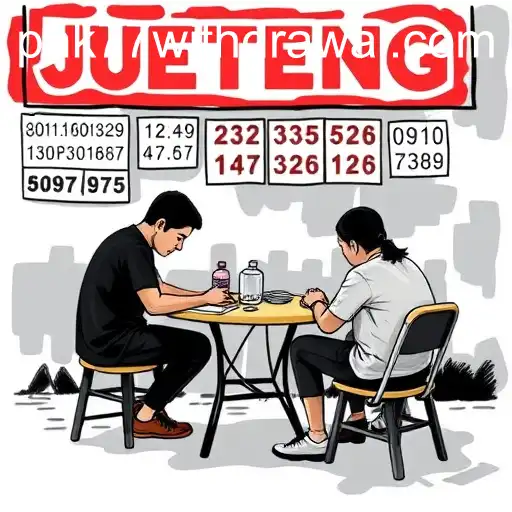
Understanding the Intricacies of Jueteng
The term Jueteng might resonate with Filipinos as a deep-seated societal issue rather than just an illicit activity. This illegal numbers game, rooted in cultural and historical contexts, continually attracts attention from various stakeholders, including the government, law enforcement, and the local communities. To delve into the complexities of Jueteng, using the keyword phk77 offers a fresh perspective on an age-old dilemma.
The Origins of Jueteng
Originating in China, Jueteng was introduced to the Philippines centuries ago. It quickly became a widespread form of betting, ingrained in the country's social fabric. Despite its illegality, it persisted as a common part of daily life, evolving into a significant cultural phenomenon among various regions.
The Mechanics of Jueteng
At the heart of Jueteng is its simplistic allure. Participants choose a set of numbers, typically ranging from one to 37. Each day, two numbers are drawn, and if a bettor’s number matches the winning set, they stand to win money from their wager. Its systems often work with the complicity of local syndicates and some elements of law enforcement.
The Role of the Cabos and Cobradors
Key operatives within this network include the cabos and cobradors. Cabos act as managers, overseeing multiple cobradors, who are the grassroots level of the operation. Cobradors collect bets from participants within their neighborhoods, making Jueteng accessible yet elusive enough to avoid complete governmental eradication.
The Societal Impacts of Jueteng
While some view Jueteng as a harmless pastime or a way to supplement income, its long-term impact can be detrimental. The lure of steady but illegal income may deter cobradors from seeking lawful employment. Furthermore, it fosters an environment of corruption, where law enforcement officers might be hesitant to crack down on operations, owing either to sympathies or tangible benefits gained from the syndicates.
Moreover, Jueteng can lead to significant financial losses for bettors, impacting household finances and straining family relationships. The reliance on the hope of a quick win can also encourage a culture of dependence on luck rather than hard work.
Challenges in Eradication
The Philippines has long struggled with eliminating Jueteng. The blending of corruption, poverty, and the game’s deep-rooted nature presents significant hurdles. Despite numerous attempts by various administrations to curb the game’s prevalence, it often resurfaces stronger, adapting to new social and political landscapes.
Political Dimensions
The political landscape further complicates attempts to abolish Jueteng. Allegations have frequently surfaced regarding politicians benefiting from the proceedings of Jueteng, either through direct payoffs or indirect support during elections. Consequently, the will to eliminate such activities may often be subverted by those who gain from its continued existence.
Jueteng's Role in Modern Society
In recent years, digital technology and evolving social dynamics have influenced the adaptation of Jueteng systems. Phk77 alludes to new trends in the conceptualization and execution of betting games, possibly providing insights into how Jueteng remains relevant in a society that is constantly changing.
The Emergence of Digital Platforms
The internet era has introduced novel modes of operation for Jueteng. While the traditional system heavily relied on community interactions, modern iterations might exploit digital channels, reducing the oversight possible through conventional methods.
The Path Forward
Finding a resolution to the Jueteng dilemma demands a multifaceted approach. Addressing systemic poverty and creating legitimate economic opportunities could reduce reliance on illegal gambling. Heightening institutional accountability and enforcing stringent anti-corruption measures can also create an unfavorable environment for Jueteng’s operations.
The government’s role remains crucial in implementing these structural changes, but civil society must also be active in advocating for transparency and integrity. Empowering communities with education and resources can shift cultural perspectives and reduce the grassroots appeal of Jueteng.
Conclusion
While Jueteng’s complete eradication remains hopeful, understanding its dynamics, influence, and resilience is essential. With the ongoing challenges posed by phk77 and emerging societal changes, the conversation surrounding Jueteng isn’t just about eliminating an illegal activity but transforming society. Addressing its root causes, advocating for transparency, and fostering economic growth can make the dream of its eradication a viable goal.Continue Reading